They say that a picture is worth 1000 words. They are wrong. A picture is worth as much as the viewers' knowledge allowing to interpret what they see


Akropolis Parthenon – Ακρόπολη Παρθενώνας


Parthenon, the most iconic monument of Greece, is a temple built on the Athenian Acropolis. It is dedicated to the goddess Athena, the protector of city of Athens in antiquity. Built in 4th century BC, the temple served as the treasury for the Athenian empire. After the 6th century AD the temple converted to a church dedicated to Virgin Mary while during the Ottoman occupation it turned into a mosque. In 1687, the Parthenon was severely damaged because of a Venetian bomb that ignited Ottoman ammunition that was kept inside the Parthenon.

The name Parthenon in Greek means the apartments of the unmarried women derived from the Greek word for 'virgin'. Parthenon and Acropolis in contemporary era have become a globally recognized symbol which is tied not only with the classical era of Greece but also with the notion of democracy.

Read more

Temple of Olympian Zeus, Athens


500 meters south east of acropolis, the ruins of a temple dedicated to the Olympian Zeus is located. This monuments is also known as the Columns of the Olympian Zeus as only 16 of the 104 columns of the structure still remain at the location. Its construction began during 6th century BC by the Athenian tyrants Hippias and Hipparchos with an aim to build one of the greatest temples in the ancient world. The construction of the temple was not completed because of the overthrown of the tyrants by the Athenian democracy. The democratic Athenians believed that it would be an hubris to build a structure of that scale. Specifically, Aristotle in his work Politics, referred to the temple as an example of how tyrannies force people to work in large scale works for the state that takes away all the time, the energy and the means of the people preventing them from reacting. The temple completed by the Roman Emperor Hadrian in the 2nd century AD more that 600 years after its construction started.

Read more

Acropolis – Ακρόπολη


The Erechtheion is an ancient Greek temple located on the north side of the Athens Acropolis. The temple was built around 415 BC by Phidias and was dedicated both to Athena and Poseidon. It is famous for the beautiful porch on its southern side with the six female figures statues. These female statues are called Caryatids and they are serving as an architectural support taking the place of columns supporting a structure. Ancient Greeks used very often Caryatids as an architectural detail to their structures such as in the treasuries of Delphi, and this style was copied also by the Romans.

During the Ottoman occupation of Greece, a Scottish nobleman was appointed as an ambassador of Britain in Constantinople. Lord Elgin with the permission of the Ottoman authorities removed numerous antiquities from all over Greece. The most notable of them was one Caryatid removed from the Erechtheion which Elgin used it to decorate his mansion in Scotland. Elgin, after the burden of his escalating debts, sold the Caryatid to the British museum and the statue still remains there since then.

Read more

Athens, Greece


The city-state of Athens during 480 and 404 BC went through a period of economic growth and cultural flourishing. This era has been commonly referred to as the golden age of Athens or the golden age of Pericles. Many of the most influential people lived during that era such as the playwrights Aeschylus and Sophocles, the historians Herodotus and Thucydides, the physician Hippocrates and the philosopher Socrates. During Pericles rule the most important present remains were constructed in the Acropolis of Athens including the Parthenon, the Propylaia, the Erechtheion and the temple of Athena Nike.

Read more

Piraeus, Greece


Piraeus is a port city within the wider metropolitan area of Athens located 12 kilometers southwest of Athens city center. Piraeus in prehistoric times was an island which was connected with the mainland by a shallow piece of land which was flooded with water the most part of the year. Piraeus was selected as the main port of classical Athens and became the epicenter of trade during the golden age of Athens. After the 4th century AD the port started declined to become mostly deserted during the Ottoman occupation but started developing again in 19th century after the declaration of Athens as the capital of Greece. In 2014 served more than 14 million passengers becoming the busiest port of Europe for that year.

Read more

Athens, Greece


Athens is a relatively small city in terms of population as 600.000 people live within its city limits. However the wider metropolitan area of Athens includes in total 41 different cities and most of them have indistinguishable city borders making Athens a haotic metropolis which is the 4th most populated capital of European Union with 4 million people. Two of the cities of the metropolis (Kalithea and Nea Smyrni) are in the list of the top ten more dense populated cities in Europe with more than 21 thousand people living per square kilometer. As a comparison reference New York's most dense populated areas have 19 thousand people per square kilometer. Despite the efforts of decentralization of the population of Athens, currently the 40% of the population of Greece still lives in the wider metropolitan area.

Read more

Temple of Olympian Zeus, Athens


The city of Athens shares the same name with the goddess of ancient Greeks Athena which was the goddess of wisdom. There was a debate in antiquity whether the city gave the name to the goddess or the goddess gave the name to the city but today scholars agree that the city gave the name to the goddess. According to an ancient myth, before the city of Athens haven't been named yet, the goddess Athena and the god Poseidon, the god of the seas, compete over who will be the protector of the city. Both gods agreed that whoever gifts the citizens of the unnamed city with the best gift, will win and will become their patron. Poseidon gave Athenians the first horse and Athena gave them the first domesticated olive tree. The olive tree was considered the best gift and Athena became the protector of the city.

Read more

Athens, Greece


Athens, one of the world's oldest cities with a history of more than 3000 years, is the capital and the largest city in Greece. Ancient Athens is consider to be the cradle of western civilization and the birthplace of democracy mostly because of the cultural and political impact on the Europe continent during the 5th and 4th centuries BC. The evidences of the classic era are still present in modern Athens with the famous Parthenon to still standing majestically on the Acropolis hill reminding the era of the powerful Athenian city state.

Read more

Athens, Greece


Have you ever been in Athens in Greece? I did and I'm going to share a few pictures and little of the city's history in my next posts. Do you have any nice pictures from Athens? If you have, let me know with a comment here and I will share your pictures in my stories What is the most exciting thing about Athens you know?

Read more

Bálos


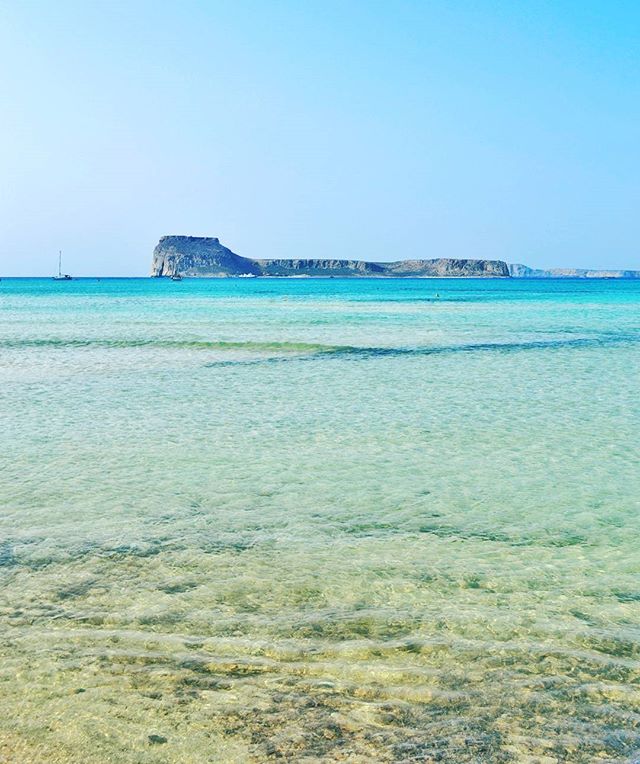
The view of Imeri Gramvousa from Balos reveals the odd shape of the island. The castle of Gramvousa lies on the highest ground of island

Read more