

Tag: greece_hero

Firá, Kikladhes, Greece
Santorini doesn't lost its beauty after the sunset. When the sun is gone, the lights from hotels, restaurants and houses brighten up the caldera cliff where Fira is built while the luxury yachts and cruise ships give to the caldera lagoon a glamorous glow

Kamári, Kikladhes, Greece
After the destructive earthquake of 1956 the people of a Mesa Gonia (a village completely flattened by the earthquake) founded the coastal village Kamari. Kamari took its name from a small arch that was part of a sanctuary dedicated to Poseidon. Kamari beach is the longest beach of Santorini and one of the most visited by tourists. However, because it is really big, you will never find it overcrowded. The water there is crystal clear, but the beach is not recommended for small children as there are slippery stones and you need to be careful.

Palea Kameni
In Palea Kameni Island, near the church of Agios Nikolaos, the sea turns from blue, into green and then into brown. The cause is the sulfur, a yellow substance, coming out of the hot springs. The water near the springs can reach 33 Celsius and people come with small boats from the main island to swim to the muddy beach. Sulfur is very beneficial for the skin as it can help with many skin conditions and allergies while you can find it in many cosmetics and soaps. If you visit the hot springs remember not to wear a white swimming suit as it will be probably ruined by the sulfur.

Santorini
It's 9th July of 1956 and the time is 05:11. An earthquake of 7.5 degrees in the Richter scale leaves Santorini in a devastating state. 12 minutes later an aftershock of 6.9 Richter terrorize the locals. 35% of the houses are collapsed and 45% suffer severe damages. A tsunami of 25 meters hits the nearby islands and breaks many boats in ports all over aegean sea including Crete. 53 fatalities and 100 injured added in the final sum of the disaster that nature brought upon Santorini to show its power over people. That was the largest earthquake in Europe in the 20th century.

Thíra, Kikladhes, Greece
400 meters above the sea level the capital of Santorini, Fira is built on the eyebrow of the caldera. The white houses built on the edge of the cliff are a spectacular sight when you are looking the city from the sea.

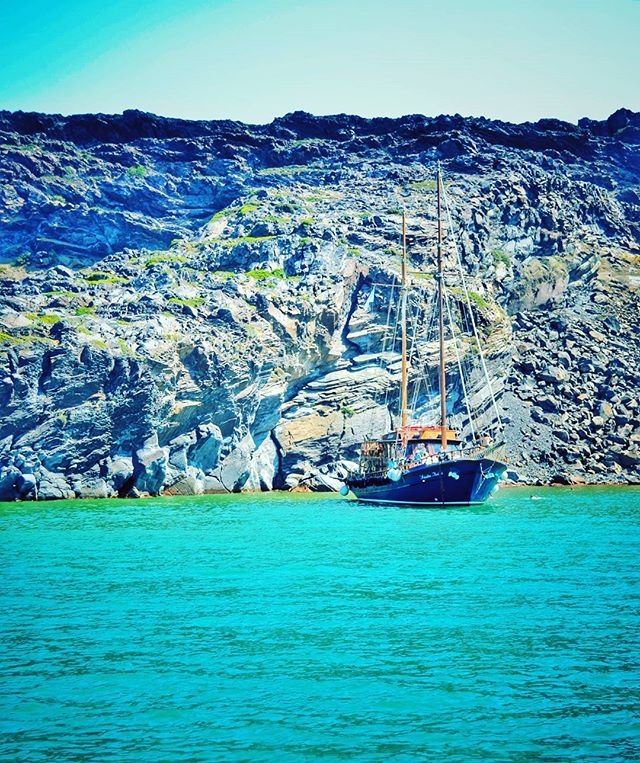
Nea Kameni Volcano
The two most important events that formed Nea Kameni took place during 1707 and 1866. During the events of 1866, foreign governments sent scientists to observe the volcanic activities and it was the first time that photography was used to study such phenomena. Among the people that observed this unique sight of island creation was Jules Verne. Later Verne referred to Santorini in his famous book '20.000 leagues under the sea'. While you are in Santorini and watching the Nea Kameni island remember the words of Captain Nemo: 'Nothing is ever ended in the volcanic parts of the sea'. Probably the next time you will be back to Santorini, Nea Kameni will not be the same.

Nea Kameni
The round volcanic island in the middle of Santorini's caldera lagoon is called Nea Kameni. The name means the new burnt island and it happens to be the most newly created land in the Mediterranean sea. The island created in 1570 after a volcanic eruption. In later years a series of volcanic eruptions and seismic activities created the island as we know it now. Today on this island scientists observe steam activity and there are many thermal springs along its coasts
