Category: Feed

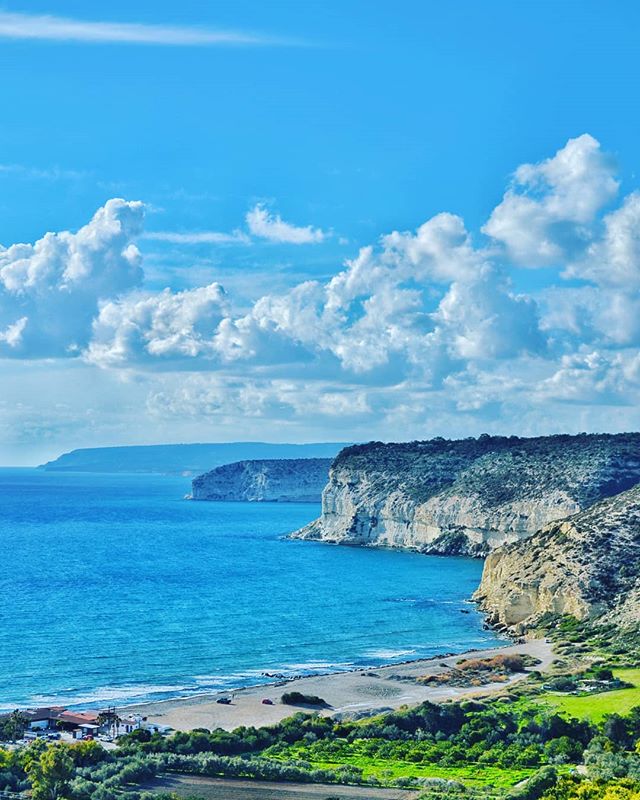
Kurion, Cyprus
Cyprus most important city/kingdom in antiquity was Kourion. The city was build on the hills and overlooked the valley of the river Kouris. According to archaeological evidence the ancient inhabitants believed that were descendents of people that immigrate there from Argos, Peloponnese. The kingdom of Kourion destroyed by a devastating earthquake in 365 AD. Today at the site still remain in great condition a beautiful Greco-Roman theater, the house of Estolios, the Roman Agora and the Kourion Stadium. Kourion is a also famous as a great site for paragliding and many lovers of this sport use the place as a launching spot.
⠀⠀
⠀⠀

Medieval Castle of Paphos
The medieval Castle of Paphos is located on the west side of the harbor. It was built as a Byzantine fort to protect the city from external enemies and it was destroyed in 1222 by a major earthquake that hit the city. Throughout history, the castle has been used as a fortress and a prison and during the British occupation, it was used as warehouse storing salt. Today, in front of the castle the annual open-air Paphos cultural festival takes place every September. ⠀
⠀⠀
⠀⠀

Cyprus
In antiquity, there were two locations called Paphos, the new and the old one. Around 400 BC, the last king of Paphos, Nikoklis, moved the capital of his kingdom to the west and founded the New Paphos (today the Kato Paphos). During Hellenic area, New Paphos became the capital of Cyprus and remained a capital even after the Romans occupied Cyprus in 58 AD. A few years later, the Apostles Varnavas, Paul, and Marcus reached the city and spread the new religion. The Roman ruler of Cyprus, Sergius Paulus, converted into Christian, and Cyprus became the first country in the world to be ruled by a Christian. ⠀
⠀
⠀

Páfos
Walking down the port of Paphos you will meet a big rusty bench with a Greek text engraved on it. The text is part of Sophocles tragedy "Antigone" and it's an anthem dedicated to the power of love. The bench is called the 'bench of the lovers' so don't miss the chance to take a photo with your other half. 'Oh love, invincible in battle
you rule in every step you make.
You, who make young girls asleep in nights.
You, who can move across the seas
and get deep in yards.
No one escapes from you
No immortals, nor Gods.
You live in the body,
and driving it crazy.
You turn sane people, insane
and leading them to their end.' "Antigone", by Sophocles *text is loosely translated from Greek to English.

Paphos, Paphos, Cyprus
According to the myth; the Greek goddess of love, beauty, pleasure and procreation, Aphrodite, was born in Cyprus. In a cruel version of the myth, Cronus cut off the genitals of his father Uranus and throw them in the sea. From the white foam (aphros in Greek) of the sea hitting on the rocks of the coast near Paphos, the beautiful goddess Aphrodite was emerged.
In the picture, the sculpture from Giota Ioannidou represents a modern Aphrodite coming out of the sea. For many, the sculpture symbolizes a young woman from Syria or Irak seeking refuge by struggling to come out to the sore. What do you think?

Paphos, Paphos, Cyprus
The etymology of the name of Cyprus (Kypros in Greek) is unknown. The earliest reference to it is in the 15 century BC in Greek Linear B syllabic script. Some, support that it came from the word 'kyparissos' the Greek word for the tree cypress. The metal copper took its name from the island because during the Roman era, most of the copper was mined in Cyprus. The metal of Cyprus (aes cyprium) became cuprum in Latin and later copper in English.

Pétra tou Romioú
According to the myth, Digenis Akritas with his extraordinary powers pushed away the Arab crusades by throwing against them a rock stopping their efforts to invade Cyprus. The local tradition has it that you have to swim around the rock three times and this will bring you blessings such as eternal beauty and youth, good fortune and the real love. Petra tou Romiou (i.e. the stone of the Greek) with it's amazing landscape and it's beautiful beach justifies why you should pay a visit to this amazing island.

Páfos
Paphos, the cultural capital of Europe for 2017, is a coastal city in the South West of Cyprus. It's an exceptional touristic destination all year long as the temperatures even in January can reach up to 25 degrees. Of course most people visit Paphos during summer and enjoy the beautiful beaches in Coral Bay or the crystal waters at 'the rock of the Greek'. Paphos is a beautiful city with amazing and photogenic little alleys and an amazing old port ideal for night walks with a beautifully lighted castle.